Friday, 30 August 2013

Hannah Bay shorebird surveys

I was stationed at Hannah Bay (specifically at East Point) with Ross Wood, Alvan Buckley and Barb Charlton for the first two weeks of August.  The shorebirds were great.  The weather and bugs weren't....anyways, here's the post I put onto Ontbirds, with a few photos added at the end.

This is the project's fifth report, for the period 31 July - 12 August 2013 from East Point on Hannah Bay, Ontario, on the south coast of James Bay. This camp is located in the heart of the East Point Important Bird Area.

The Hannah Bay crew consists of Ross Wood (volunteer), Mike Burrell (Bird Studies Canada), Barb Charlton (volunteer) and Alvan Buckley (volunteer). Final reports from Hannah Bay, Little Piskwamish Point and Longridge Point will be shared as soon as possible.

The Hannah Bay camp is 68 km east of Moosonee, Cochrane District. High counts during the period are given below.

Black-bellied Plover – 101 adults on August 10. No juveniles to date.

American Golden Plover – 2 adults on August 5 and 1 adult on August 8.

Semipalmated Plover  - 46 on August 2; the first juveniles arrived on August 7

Killdeer – 11 on August 9

Spotted Sandpiper – 4 on July 31. Only juveniles observed during the period.

Solitary Sandpiper – singles on 5 days.

Greater Yellowlegs – 554 on July 31. Juveniles were uncommon at the start of the period but had increased to about 30% by the end.

Lesser Yellowlegs – 395 on August 1. Juveniles represented about 25% of birds at the start of the period but increased to well over half by the end.

Whimbrel – 6 on August 6. This species was mostly just observed flying over the study area.

Hudsonian Godwit – 674 molting adults on August 11.  East Point appears to be an important stopover site for this species, as the 674 birds represents almost 1% of the global population of this species. Flagged birds were seen on 9 occasions and represented at least 3 individuals.  Based on flag colour, one of these flagged birds was banded in Canada and the other two were banded in Chile. On August 10 as the tide came in Ross Wood and Mike Burrell watched a flock of 27 individuals circle overhead gaining altitude for close to 30 minutes before eventually heading south, presumably leaving James Bay.

Marbled Godwit – 39 on August 3. Small numbers daily.

Ruddy Turnstone – 35 adults on August 2. The first juveniles arrived on August 6.

Red Knot – 42 birds in a flyover flock on August 9.  This species was very uncommon at East Point, with birds on the ground only on 3 days, including 2 juveniles on August 11.

Sanderling – 6 birds on August 4. Uncommon at East Point with low counts on 7 days only. No juveniles observed.

Semipalmated Sandpiper – 7311 on August 6. Juveniles represented a very small portion of birds (virtually none) when we arrived but had increased to over 50% by the end of the period. On August 10 as the tide came in Ross Wood and Mike Burrell watched several flocks totalling over 500 birds flying southeast at high altitude, presumably having fattened up enough to leave James Bay. On August 12 Ross Wood and Alvan Buckley found an adult Semipalmated Sandpiper with an engraved flag - based on the colour of the flag this bird was originally banded in Peru.

Least Sandpiper – 425 on July 31. Mostly juveniles at the beginning of the period, by the end there were only a handful of adults left.

White-rumped Sandpiper – 2760 on August 6. No juveniles yet.

Pectoral Sandpiper – 259 on August 10.  First juvenile on August 11. On August 10 as the tide came in Ross Wood and Mike Burrell watched a flock of 40 individuals circle overhead gaining altitude before heading south, presumably leaving James Bay.

Dunlin – 6 adults on August 3.  This species was very uncommon at East Point – only adults were observed and only on 6 days.

Stilt Sandpiper – 6 adults on August 1 and 3 adults on August 3. Always observed roosting at creek mouth at high tide with Short-billed Dowitchers and Hudsonian Godwits.

Buff-breasted Sandpiper – 4 on August 2 and 1 on August 3.

Short-billed Dowitcher (hendersoni) – 6 adults on August 3. Low numbers of adults on 7 days, always observed roosting at a creek mouth at high tide with Hudsonian Godwits.

Wilson’s Snipe – 14 on August 11.

Wilson’s Phalarope – 2 juveniles on August 5. Singles seen on August 3 (adult), 7 (juvenile) and 9 (unknown).

Red-necked Phalarope – 5 juveniles on August 12. Also seen on August 1 (1 adult), 2 (1 adult, 2 juveniles), 3 (1 adult), 8 (1 adult), 10 (2 adults) and 11 (1 juvenile).

OTHER BIRDS: Blue-winged Teal – female with 9 young near camp; Black Scoter – 300 on August 7; American White Pelican – 3 birds on August 12; Yellow Rail – single bird flushed on August 7; Sora – single bird heard calling on August 5; Little Gull – 1 adult on August 2; Black Tern – 1 molting adult on August 3; Arctic Tern – adults on 4 days; Bank Swallow – flock of 15 on August 7; Gray Catbird – single around camp irregularly through period; LeConte’s Sparrow – 1-3 still singing around camp; Nelson’s Sparrow – up to 29 singing males; Common Redpoll – flocks flying over daily

MAMMALS: Single Grey Wolf seen on August 4 and 6. Black Bears observed almost daily. 1 Snowshoe Hare on July 31. Deer Mouse observed almost daily in one of the cabins (I won’t reveal whose, but you can guess!). Woodland Caribou tracks on August 1. Moose tracks most days. Striped Skunk around camp on a few days; possibly depredated on the night of August 9. Red Squirrel! around camp on several days.

HERPTILES: Wood Frog, American Toad, Northern Leopard Frog, Spring Peeper, Eastern Gartersnake.

Butterflies: Least Skipper, Common Branded Skipper, Roadside Skipper (record late for Ontario), Bronze Copper, Bog Copper, Spring Azure, Atlantis Fritillary, Silver-bordered Fritillary, Arctic Fritillary, Northern Crescent, White Admiral, Viceroy, Common Ringlet

ODONATES: Northern Spreadwing, Emerald Spreadwing, Marsh Bluet, Eastern Forktail, Variable "Lineate" Darner, Lake Darner, Shadow Darner, Zigzag Darner, Four-spotted Skimmer, Crimson-ringed Whiteface, Black Meadowhawk, Cherry-faced Meadowhawk.

Check out Alvan’s blog for photos and a map of the Hannah Bay camp location. Mike Burrell also has some photos on his blog and Jean Iron has photos from the previous crew at this location

ACKNOWLEDGEMENTS: The Western James Bay Shorebird Survey is a cooperative effort spearheaded by the Canadian Wildlife Service, Royal Ontario Museum , Ontario Ministry of Natural Resources (OMNR), Bird Studies Canada and Moose Cree First Nation. Additional support for the 2013 expedition was provided by TD Friends of the Environment Foundation. The OMNR also provides helicopter transport to and from field camps and accommodations in the staff house while crews are in Moosonee. Thanks to Ken Abraham, Rod Brook, Sarah Hagey and Kim Bennett of OMNR for logistical support. Lastly, without the many hours of dedicated volunteer support, this project would not be possible.

Some photos:
Molting adult Bonaparte's Gull
Adult White-rumped Sandpiper
 
Juvenile Semipalmated Sandpiper
Adult Hudsonian Godwit

One of only a couple Red Knots seen

Adult Red-necked Phalarope

Flagged Hudsonian Godwit.  The red flag indicates it was banded in Chile.

Least Skipper
Silver-bordered Fritillary
 
Northern Spreadwing
Marsh Bluet


Fresh juvenile Bonaparte's Gull

Fresh juvenile Herring Gull

Black Bear munching on Sow Thistle
 I tried a panorama of the creek mouth that fed into "our" bay - the photo needs to be opened on your computer to properly view it, so you can download it by clicking here.  A preview is below, but because of the photo's dimensions it will not display properly:


Tuesday, 16 July 2013

The great Brown-headed Nuthatch mystery of 2009...CASE CLOSED!

For those of you who were birding in the fall of 2009 you'll remember that early November was pretty amazing - the Phainopepla showed up in Brampton, a Sulphur-bellied Flycatcher was found in Oakville and an Ash-throated Flycatcher showed up at Pelee (those are just the highlights that showed up during that time!).  So when a report surfaced at that time of a Brown-headed Nuthatch in Brantford you can imagine that at least a few of us got real excited...

What was even more exciting was that the finder had photographed the bird! I was one of about 30+ birders who showed up in a quiet Brantford neighbourhood the next morning hoping to find this mega.  However, after spending some time there and after Andrew Keaveney talked to the finders and we all did some investigation work, we began to become suspicious.  You can read about it on Andrew's Ontbirds post here

Basically, what the consensus was was that the lady saw a bird in front of her house.  She looked online and found a photo of what she thought it was and posted the photo on her blog claiming it to be taken by her. Unfortunately for her, this little lie aimed at her friends and readers of her blog (which, by the way, requires a password to read now) quickly spun out of control.  Myself and several other birders emailed her to ask for detailed directions and she gladly gave them to us not wanting to admit she hadn't even taken the picture.  That's where the story ended.

Until now.

Hold on a sec...I'll get to the conclusion.

So today, I noticed a post on the Ontario Birds Facebook group. Kellie Superina posted a note saying that when you do a google image search for birds now the results also give you options for similar species and in some cases different age/sex classes:
The new google image search results shows similar species
That's pretty cool I thought...I wonder when that was launched? So I tried a web search to try to figure that out.  Instead I landed on this post on the ABA Blog by Ann Nightingale. I hadn't read this post until today but the gist is that Google has this new "search by image" tool that mostly fails miserably at matching photos of things.  But what it can do is look for photos on the web that have appeared elsewhere....

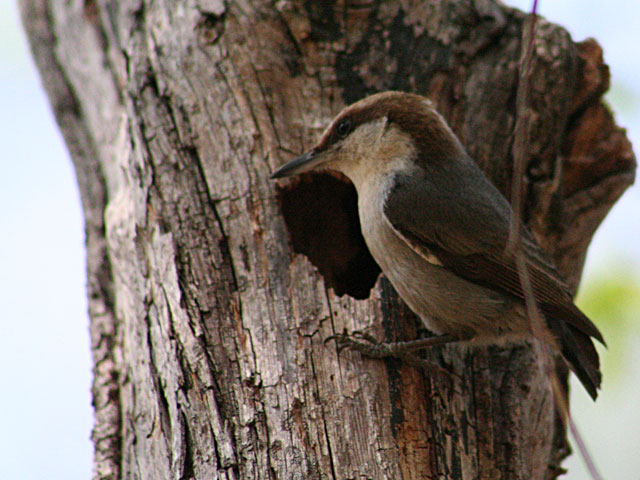
So that set me on a search to see if I could find a picture of the Brown-headed Nuthatch to test with this fancy search tool.  Well, I found the photo, and what do you know? The photo first appeared in March, 2007 (two and a half years earlier than the report) on the KennySmith.org blog! Finally, we can close that mystery forever! Here's the original photo.

Anyways, that search tool definitely could be handy to screen out bogus reports of rare birds in the future.

And of course, the lesson to be learned here is that no matter how small of a lie you start with, you could quickly find your house surrounded by angry birders!

Monday, 8 July 2013

Multi-cohort stand structure as a coarse filter of variation in mixedwood boreal bird communities

It's the middle of the summer, the breeding season is coming to a close and I figured everyone is probably looking for a good bedtime read, so here you go, (sort of) fresh off the presses:

Multi-cohort stand structure as a coarse filter of variation in mixedwood boreal bird communities

You can email me (mike.burrell.on AT gmail.com) for a pdf version if you like, or you can check out my whole masters thesis here.


Saturday, 29 June 2013

Report from Ontario's Hudson Bay coast

I've been back now just about a week and have got my photos all processed and eBird checklists entered, so figured it was time to share some of my observations from Burntpoint Creek on Hudson Bay. I was at the same camp last year from June 6-22 and you can see the report from that trip here.
The Twin Otter ready to take off in Timmins
Interesting landscape created by beavers on route to Moosonee
After being delayed in Timmins for a couple extra days due to weather (cold, rainy and some snow!) we made it as far as Moosonee late in the day on June 4.  The next morning I did a quick check of the Sewage Lagoons (picking up a nice Red-necked Phalarope) and spent some time scanning the river in front of the new MNR staffhouse where I was excited to see a flock of at least 20 Arctic Terns feeding. Then it was off for the Burntpoint Creek Research Camp.

We made a quick stop in Attawapiskat to refuel which was a new spot for me.
View of Kashechewan from the air
Attawapiskat Sewage Lagoons
Attawapiskat airport
By noon on June 5 we were arriving at Burntpoint Creek Research Camp.  The camp was set up in the early 2000s to monitor goose nesting ecology; last year we started implementing much of the Arctic Shorebird Demographics Network protocols to monitor nesting ecology of shorebirds. The camp is located about 60 km east of Peawanuck and is set about 3 km inland from the coast on a large "7"-shaped ridge.  The surrounding land is mostly a sedge-sphagnum wetland interspersed with ponds and old beach ridges with heath-lichen tundra. Here's the location of Burntpoint Creek:


View Burntpoint Creek Research Camp in a larger map
 
As we approached camp it became apparent that snow/ice was behind what it was last year, with some pretty big drifts and some ponds still with ice (and very thick ice to shore on the Bay).  We even had to shovel out the front door of one of the cabins before we could get in!

Ice-covered tundra ponds
Hudson Bay still with lots of ice

Snow drifts in the lee of treed ridges
The main cabin after we had shoveled our way in!
To go along with the snow we had a Snow Bunting in camp while we unpacked.  I saw a couple more lingering migrant Snow Buntings until June 10 - this was a species that we missed last year.


After getting mostly unpacked on the first day it was to work for the rest of the trip.  Our time was split mostly between Canada Goose nest searching and monitoring and shorebird nest searching/monitoring.  The weather this year was probably a bit cooler (most days low around 0 and highs of 5-10 C) with lots of wind but practically now precipitation - this meant that walking became easier (still wearing hip waders everywhere) on the wet tundra.  Nest searching was very successful this year with the highlights for me being 2 Smith's Longspur nests and a Red-necked Phalarope nest.  Between the group we found about 120 nests (other than Canada Geese) including almost 25 Whimbrels and 3 Hudsonian Godwits.

Insects:
Butterflies and dragonflies were a bit better this year than last for some reason (despite cooler weather).  The most common species of butterflies were Brown Elfin and Spring Azure (both seen daily on sunny days).  Also pretty common this year were Arctic Fritillary (several last year), Grizzled Skipper (none last year) and Jutta Arctic (a couple last year).  We saw Mourning Cloaks a few days and Ken Abraham photographed a Silvery Blue (none last year) one day.  On the last day of the trip I found a Red-disked Alpine near camp (none last year).  Notably absent this year were migrants - last year Ladys, Red Admirals and [Clouded] Sulphurs were all seen regularly.
 
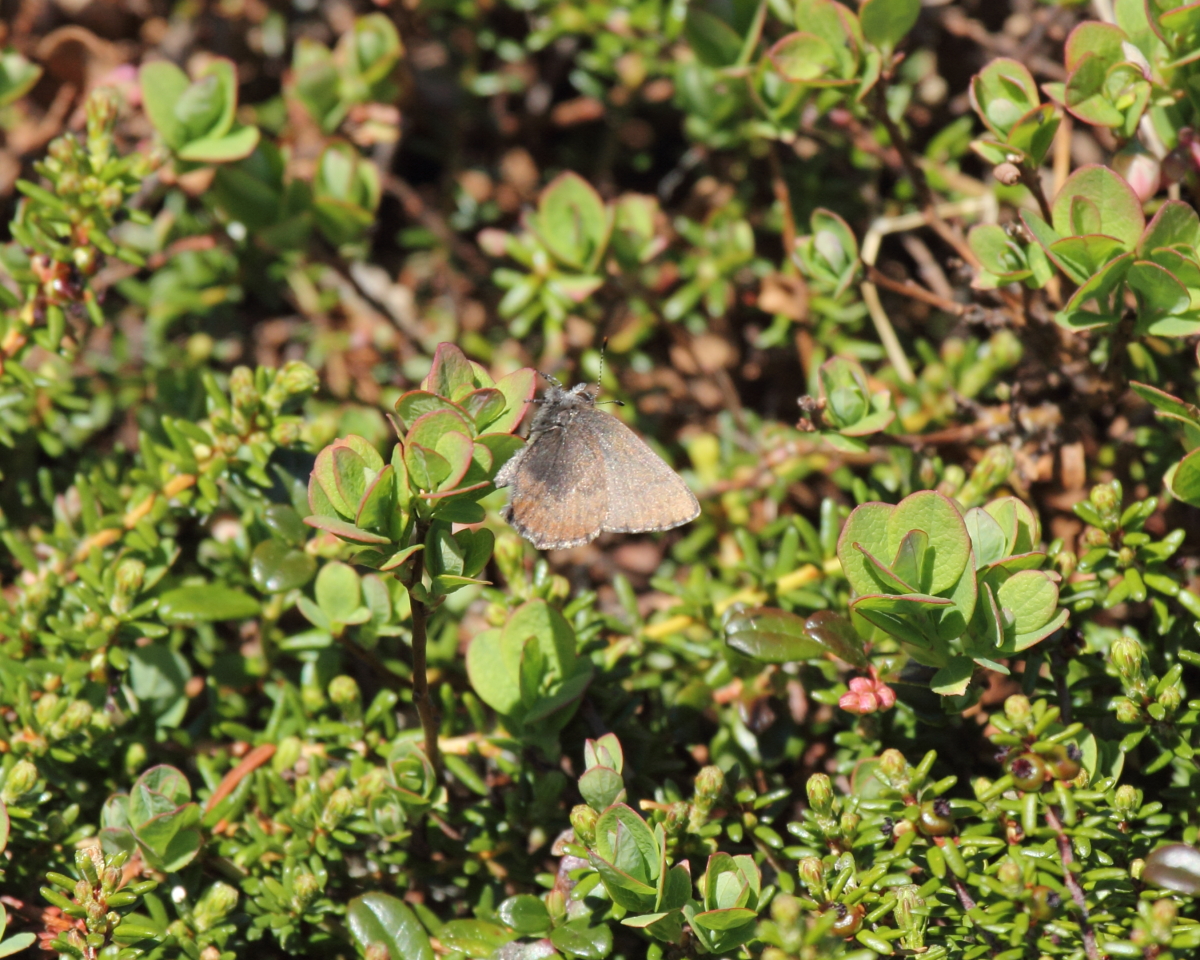
Brown Elfin on one of its food plants, Alpine Bilberry
Red-disked Alpine
Jutta Arctic blending in well with lichens
My only picture of Grizzled Skipper...like many northern butterflies they take 2 years to mature and according to Butterflies of Canada, they are more common in odd numbered years - we didn't see any last year.
Arctic Fritillary
Dragonflies started flying on June 13 about 4km south of camp (in a sheltered wooded ridge) but they weren't seen in the rest of the study area until June 18.  The first species seen again this year was Hudsonian Whiteface (common) but this year I actually saw more than the one species! I caught a couple Subarctic Bluets and also had Delicate Emerald.  On the last day (June 22) I photographed a female Northern/Boreal Bluet. On our way out we stopped to refuel at Peawanuck airport where I captured 2 (male and female) Whitehouse's Emeralds (lifer).
Hudsonian Whiteface; by far the most abundant Odonate
Delicate Emerald
Female Northern/Boreal Bluet
Whitehouse's Emerald (photo: Mark Peck)
Whitehouse's Emerald lateral view of claspers (Photo: Mark Peck)
Whitehouse's Emerald dorsal view of claspers (Photo: Mark Peck)
Aside from the "sexy" insects biting flies were quite tolerable - I didn't even need bug spray or a jacket at all this year thanks to the cooler weather. We did have a huge number of Collembolla (springtails) in one of our coolers one morning:
Springtails on the snow we packed in one of the coolers

Mammals
Well, this is a really easy category to summarize....this year was even worse than last year for small mammals - we saw none!  In fact, besides Caribou we didn't see any other mammals besides a few skunks.  We did get photos of an Arctic Fox on a trail cam we set up and I am pretty sure I saw a seal at the coast on one of the last days...As for the caribou we saw them daily, with our biggest herd being a group of 61 cows and 29 calves heading east.
An inquisitive yearling near the coast
Cow near camp
Cow and calf
Part of a herd of 90 caribou
The full herd of 90

Skunks are surprisingly common
Flowers:
The flowers on the tundra are amazing - many were flowering while we were there but many more were still not yet flowering.  To give you an idea of the timing, Tamarack was just starting to leaf out, birch was pretty well done leafing out and the willows were just starting when we left!

Hudsonian Locoweed
Lapland Rosebay covers the ridges
Butterwort basal leaves (carnivorous)
Cloudberry
Mountain Avens
Marsh Marigold
Primula egaliksensis (?)
Thrift
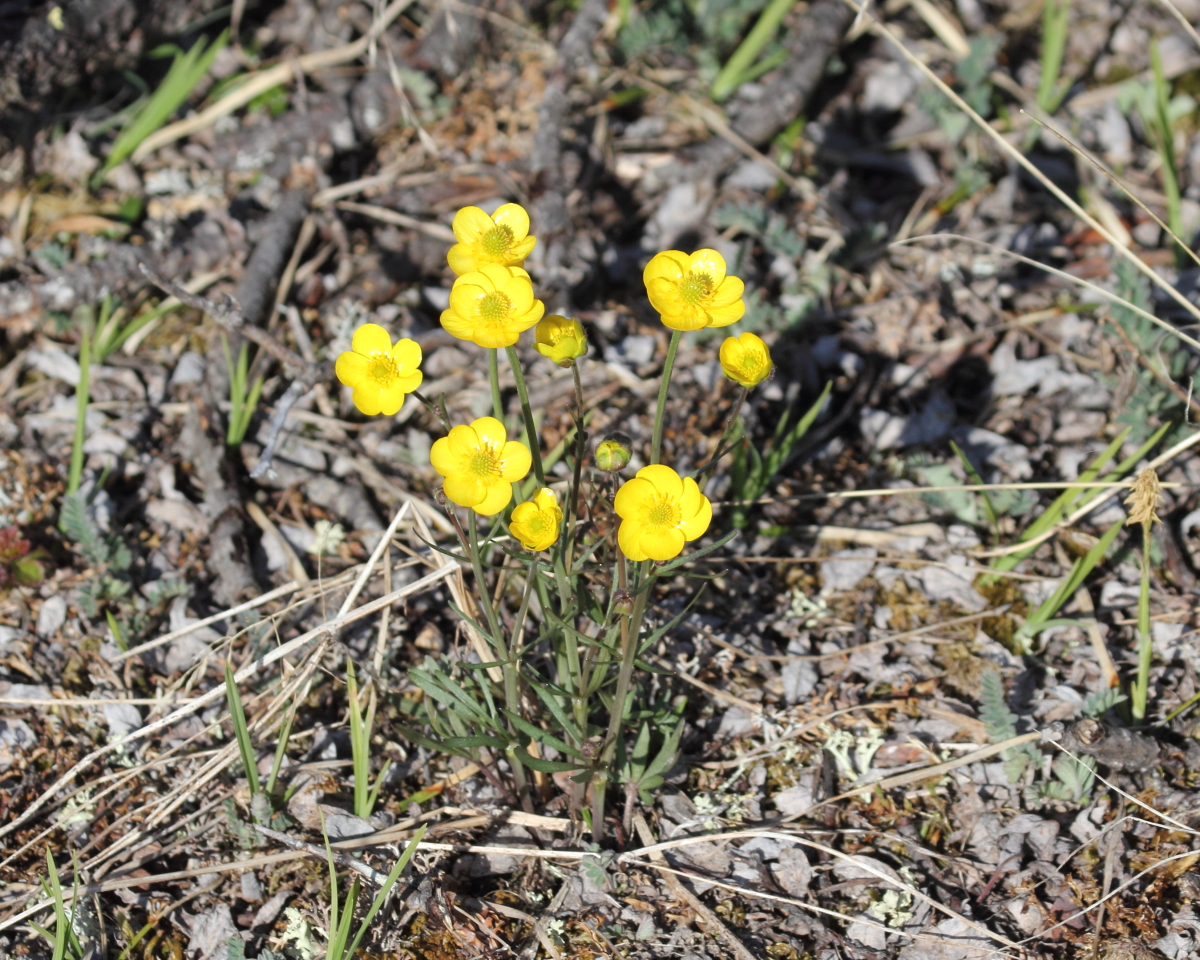
Northern? Buttercup
Birds
Well, I saw lots of birds :) Personally, I had 86 species (79 last year).  I made it out to the coast more this year (including towards the end when the ice moved off shore, giving me some nice big scoter flocks). My new species this year were:
Cackling Goose - single bird at dusk with Canadas on June 6
Ross's Goose - pure flock of 8 white birds on June 12
American Wigeon - male in coastal ponds on June 19
Black and Surf Scoter - big mixed flock of scoters, goldeneye and mergansers at ice edge on June 20/21
Hooded Merganser - male flying over on June 22
Pectoral Sandpiper - a probable fall migrant at the coast on June 19
Red-necked Phalarope - several small flocks early on and then a male at a nest with eggs
European Starling - a single bird at camp on June 6 and 10
Bank Swallow - single bird at camp on June 19
Blackpoll Warbler - 2 singing males on June 13 (when I went further south into a more treed area)
Chipping Sparrow - Mark Peck and I found a single bird near camp on June 19 after some south winds
Hoary Redpoll - I found and photographed a male at camp on June 6
Male Hoary Redpoll at camp
My first Red-necked Phalarope at the coast with Sanderling


Of course, the real highlights are the common birds at Burntpoint, which gave me lots of good photo opportunities.  Willow Ptarmigans probably top that list since the birds have so much personality and are pretty approachable.  We collectively found about 5 nests, including this one, below.  The female actually hissed at Mark Peck and I when we were nearby:


Listen closely to this video and you can hear a Red-throated Loon in the background:

Next to ptarmigans, shorebirds steal the show at Burntpoint. Whimbrels, Dunlin, Least Sandpipers, Wilson's Snipe and Hudsonian Godwits all nest in the sedge marsh/fen.  Semipalmated Plover and Killdeer appear near the coast where there is drier land. For the first week or so migrant species (Black-bellied Plover, White-rumped and Semipalmated Sandpiper, Sanderling and Ruddy Turnstone) were still moving through, mostly on the coast.
Ruddy Turnstone at coast

Dunlin doing display flight
Whimbrel dropping bombs!
Whimbrel calling

female Hudsonian Godwit
 

Pair of Hudsonian Godwits
Of course, there are lots of other very cool birds at Burntpoint, including Smith's Longspurs, loons (Red-throated and Pacific breed in the study area) and Parasitic Jaegers (nest).
Male Smith's at the top of a spruce

Another male
Me banding a female Smith's! (Photo: Mark Peck)
Despite the constant wind, the song of Smith's Longspur carries extremely well on the tundra:

Pacific Loon on a nest
Pair of Red-throated Loons
Red-throated Loon taking off
Parasitic Jaeger

Bad-ass Parasitic Jaeger
Near the nest the jaegers do a very intense distraction display:

Of course, there were a few other photo highlights:
Brown Thrasher near camp...surprisingly regular on Hudson Bay
Pudgy little Horned Lark nestlings
Proud mama Horned Lark
Yellow Warblers are common in willow thickets
Nelson's Sparrows didn't arrive until June 22
As you can see, it is an amazing part of Ontario!

Here's a summary of my eBird data:

Snow Goose  17.24%
Ross's Goose  3.45%
Brant  3.45%
Cackling Goose  3.45%
Canada Goose  82.76%
Tundra Swan  20.69%
American Wigeon  3.45%
American Black Duck  24.14%
Mallard  34.48%
American Black Duck x Mallard (hybrid)  3.45%
Northern Shoveler  41.38%
Northern Pintail  75.86%
Green-winged Teal 27.59%
Greater Scaup  6.90%
Lesser Scaup  13.79%
Surf Scoter  6.90%
White-winged Scoter 6.90%
Black Scoter  6.90%
scoter sp.  3.45%
Long-tailed Duck 37.93%
Common Goldeneye  13.79%
Hooded Merganser  3.45%
Common Merganser  10.34%
Red-breasted Merganser 27.59%
Willow Ptarmigan  96.55%
Red-throated Loon 79.31%
Pacific Loon  27.59%
Common Loon  17.24%
Northern Harrier  72.41%
Bald Eagle  24.14%
Rough-legged Hawk 3.45%
Sandhill Crane  37.93%
Black-bellied Plover 24.14%
American Golden-Plover 20.69%
Semipalmated Plover  27.59%
Killdeer  31.03%
Spotted Sandpiper  6.90%
Lesser Yellowlegs  3.45%
Whimbrel  93.10%
Hudsonian Godwit  93.10%
Ruddy Turnstone  6.90%
Sanderling  6.90%
Semipalmated Sandpiper  20.69%
Least Sandpiper  82.76%
White-rumped Sandpiper 13.79%
Pectoral Sandpiper  3.45%
Dunlin  82.76%
Stilt Sandpiper  3.45%
Short-billed Dowitcher 10.34%
Wilson's Snipe  86.21%
Red-necked Phalarope 27.59%
Bonaparte's Gull  13.79%
Herring Gull  89.66%
Arctic Tern  48.28%
Parasitic Jaeger  48.28%
Merlin  6.90%
Peregrine Falcon  13.79%
Alder Flycatcher  3.45%
American Crow  6.90%
Common Raven  68.97%
Horned Lark  72.41%
Tree Swallow  20.69%
Bank Swallow  3.45%
Barn Swallow  6.90%
American Robin  68.97%
Brown Thrasher  3.45%
European Starling  6.90%
American Pipit  20.69%
Lapland Longspur  24.14%
Smith's Longspur  62.07%
Snow Bunting  10.34%
Yellow Warbler  82.76%
Blackpoll Warbler  3.45%
Yellow-rumped Warbler 37.93%
Wilson's Warbler  3.45%
American Tree Sparrow  58.62%
Chipping Sparrow  3.45%
Savannah Sparrow  86.21%
Nelson's Sparrow  3.45%
Fox Sparrow  3.45%
Lincoln's Sparrow  68.97%
Swamp Sparrow  6.90%
White-throated Sparrow 34.48%
White-crowned Sparrow 89.66%
Dark-eyed Junco 3.45%
Rusty Blackbird  6.90%
Common Redpoll  93.10%
Hoary Redpoll  3.45%